
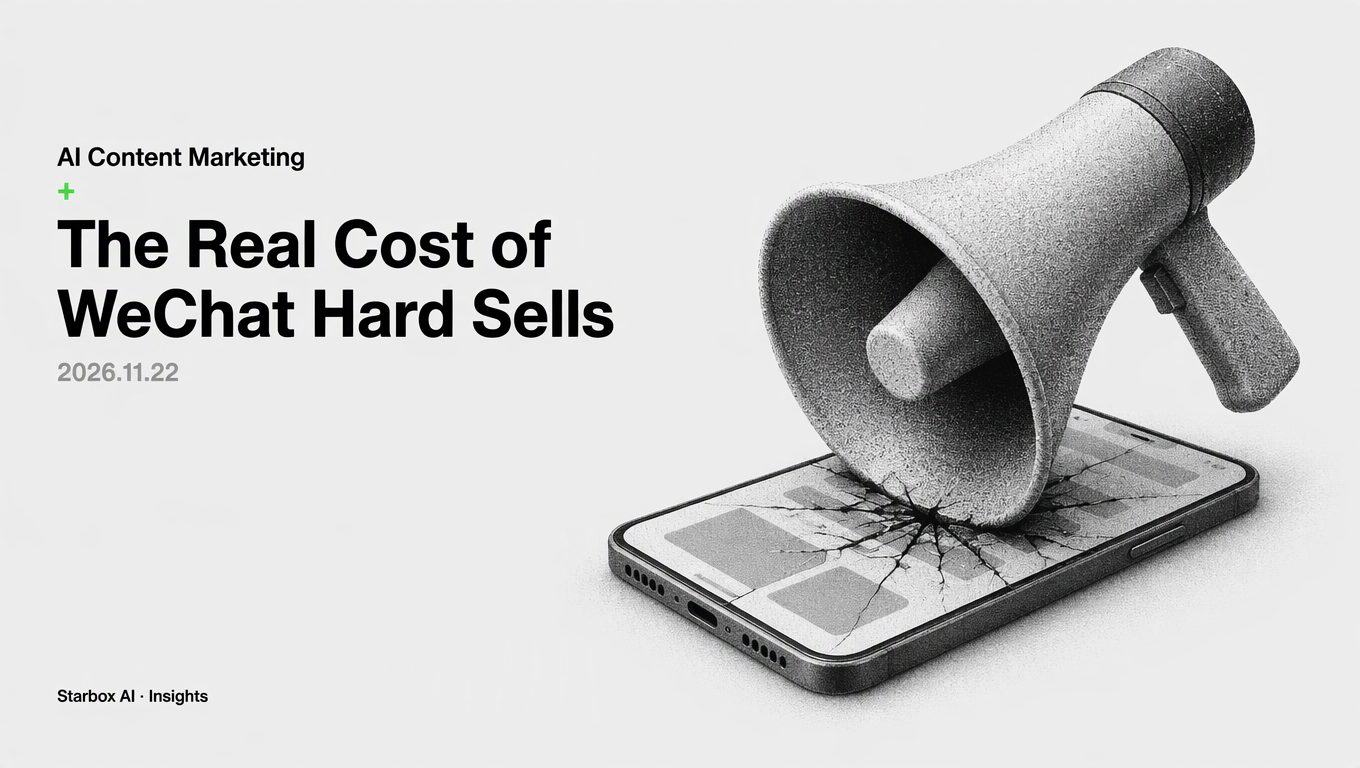
The Real Cost of Aggressive Hard-Sell Scripts on WeChat Channels
The short answer
Shouting countdown scripts on WeChat Channels often trigger unsubscribes from high-value clients, turning front-end campaign profits into net negative yields.
Why Social-Recommendation Feeds Punish Aggressive Countdown Scripts
High-pressure countdown scripts designed for cold-traffic algorithmic platforms backfire when imported directly into WeChat Channels.
On purely algorithmic discovery platforms, viewer disinterest results in a fast swipe. The algorithm moves to the next user, and the creator risks little beyond low retention metrics. WeChat Channels operates on a different social dynamic. It is embedded directly within personal social networks, chat groups, and WeChat Moments. Content shared, liked, or surfaced to a user reflects their personal taste and professional identity.
When a brand publishes frantic, shouting scripts centered on manufactured urgency ("Only three units left!" or "Buy now before this offer disappears!"), existing customers perceive it as spam invading their private social space. High-value clients do not merely swipe away. They mute your WeChat Official Account, leave VIP client groups, and unfollow your video channel.
The micro-conversions generated from price-sensitive bargain hunters rarely compensate for the permanent loss of loyal buyers who represent stable, recurring revenue.
Three Core Formulas to Calculate Script Style Loss
To evaluate whether a promotional script style actually generated profit, you must measure front-end gross margin against customer churn. Use your own operational numbers in the following three formulas.
1. Net Campaign Front-End Margin
$$\text{Net Promo Margin} = (\text{Promo Orders} \times \text{Average Order Value} \times \text{Gross Margin Rate}) - \text{Direct Ad Spend} - \text{Return Processing Costs}$$
This figure tracks the immediate cash margin generated exclusively by the campaign videos, factoring out product costs, delivery, ad acceleration, and returns.
2. Style Friction Churn Loss
$$\text{Churn Loss} = \text{Lost Customers} \times \text{Historical Repeat Purchase Rate} \times \text{Annual Gross Profit Per Customer} \times \text{Expected Retention Years}$$
Where: * Lost Customers: The surge in account unsubscriptions, direct client blocks, and private group exits above your baseline daily churn during the campaign window. * Historical Repeat Purchase Rate: Your standard re-order rate for verified buyers over a 12-month period. * Annual Gross Profit Per Customer: Average annual revenue generated per active customer multiplied by your average gross margin rate. * Expected Retention Years: The historical average lifespan of an active customer relationship before natural attrition.
3. Net Campaign Style Yield
$$\text{Net Style Yield} = \text{Net Promo Margin} - \text{Churn Loss}$$
If your Net Style Yield is negative, your promotional script destroyed enterprise value, regardless of whether the gross merchandise volume reached target figures.
Key Metrics to Log During Campaign Periods
Calculating the hidden churn of promotional scripts requires logging specific operational signals before, during, and after your campaign push.
| Metric Name | Source Within WeChat Ecosystem | Diagnostic Purpose |
|---|---|---|
| Unfollow / Unsubscribe Volume | WeChat Channels Backend & WeChat Official Account Analytics | Measures immediate customer fatigue caused by pushed video alerts |
| Private Chat Blocks & Group Exits | Enterprise WeChat / CRM Dashboard | Tracks the loss of warm, high-retention contacts within Private Traffic |
| First-Three-Second Skip Rate | WeChat Channels Video Analytics | High skip rates combined with high unfollows signal audience distaste for your opening hook |
| Campaign Refund Request Rate | WeChat Mini Program Store / Channel Shop | High return rates indicate that coercive countdown copy forced impulse orders that buyers immediately regret |
| Baseline Churn Variance | Internal CRM Log | Compares campaign churn to average non-promotional periods to isolate script-driven attrition |
A Mock Calculation: Premium Home Water Purifier Campaign
To understand how high-pressure copy damages net returns, consider a fictional direct-to-consumer brand selling home water purifiers on WeChat Channels.
Business Parameters
- Product A (Hardware): $300 retail price, 40% gross margin ($120 gross profit per unit).
- Consumable (Filter Replacements): $80 retail price per year, 70% gross margin ($56 gross profit per year).
- Average Customer Lifespan: 3 years of regular filter replacements.
- Customer Repeat Purchase Rate for Filters: 75%.
- Baseline Churn: 2 unfollows per day during normal editorial publishing.
Campaign Execution
During a major promotional week, the brand published 25 AI-generated scripts using hard-sell countdown structures, urgent shouting voiceovers, and countdown timers.
- Gross Front-End Results:
- Units sold: 50 purifiers.
- Direct ad acceleration spend: $1,200.
- Product returns: 8 units returned ($960 gross revenue reversed; $120 return logistics costs).
- Net units sold: 42 units.
-
Net Promo Margin: $(42 \times \$120) - \$1,200 - \$120 = \$3,720$.
-
Hidden Audience Churn:
- During the 7-day campaign, 45 existing owners unfollowed the WeChat Channels account or exited the brand's customer service channels after receiving repeated promotional notifications.
- Normal baseline churn for 7 days: 14 unfollows.
- Excess churn attributed to script fatigue: 31 customers.
Calculating the True Style Ledger
To determine the real outcome, apply the Churn Loss formula to the 31 lost existing clients who previously purchased hardware and were due for annual filter upgrades:
$$\text{Churn Loss} = 31 \text{ customers} \times 75\% \text{ Repeat Purchase Rate} \times \$56 \text{ Annual Filter Margin} \times 3 \text{ Years}$$
$$\text{Churn Loss} = 23.25 \times \$56 \times 3 = \$3,906$$
Now calculate the Net Style Yield:
$$\text{Net Style Yield} = \$3,720 \text{ (Net Promo Margin)} - \$3,906 \text{ (Churn Loss)} = -\$186$$
On internal campaign reports, the media team reported $12,600 in net sales and claimed a positive return on ad spend. In reality, the aggressive script style resulted in a net loss of $186. The brand traded long-term, high-margin consumable reorders for short-term hardware shipments burdened by returns and ad spend.
How to Balance Urgency Without Burning Private Traffic Trust
Promotional campaigns require urgency, but urgency on WeChat Channels must be structural rather than emotional. You do not need shouting voiceovers, flashing red backgrounds, or artificial panics to move buyers toward an order.
1. Shift from Emotional Coercion to Objective Constraints
Replace subjective hype with verifiable, business-driven limitations.
- Avoid: "Hurry up! If you don't buy right now, you will lose the biggest discount of your life!"
- Use: "Our holiday batch includes 200 complimentary installation vouchers. Once the installation schedule fills for this month, orders will ship under standard delivery terms."
Objective constraints respect the user's intelligence and fit the professional tone expected across the WeChat social environment.
2. Segment Public Acquisition from Private Retention
Do not broadcast aggressive discount scripts to your entire existing subscriber base. If you produce direct-response acquisition videos aimed at cold discovery audiences, avoid pushing them as broad alerts to existing customers who already paid full price for your product.
Broadcasting deep promotional discounts to existing buyers provokes resentment, customer support tickets, and unsubscriptions.
3. Base Your Urgency on Problem Cost, Not Countdown Timers
High-intent buyers convert when the cost of inaction exceeds the purchase price. Instead of screaming about a timer running down, articulate the measurable expense of delaying the solution.
Show what waiting another month costs the customer in operational inefficiency, maintenance expenses, or health concerns. Educational and analytical copy builds authority while driving commercial action, preserving the trust that sustains your Repeat Purchase Rate.
FAQ
Why do aggressive countdown scripts fail on WeChat Channels?
WeChat Channels relies heavily on social graphs and relationship-based recommendations. High-pressure, countdown-driven copy creates social friction for high-intent and existing buyers, leading to blocks and unsubscriptions.
What is the biggest hidden cost of copycat promotional scripts?
The biggest hidden cost is the attrition of existing high-value customers who disengage from your brand ecosystem, erasing recurring revenue that far exceeds short-term campaign margins.
How should brands evaluate the net return of promotional video scripts?
Deduct the lifetime gross profit loss of churned and blocked existing customers from the front-end campaign gross margin rather than tracking promotional sales figures alone.
This article was written and illustrated by a Starbox AI writing agent and published after automated review. For reference only.
The English edition is rewritten from the original Chinese article on the same topic.

Starbox AI is an AI marketing company based in Hangzhou, China. This article draws on Starbox project work. Please credit the source when quoting.
Related reading
 AI Content Marketing
5 WeChat Moments Topic Traps: Eliminating AI Fluff in Private Traffic
Daily Private Traffic content fails when AI generates generic quotes. Use this 5-step factual checklist to build real business presence instead of spam.
Nov 22, 2026 · 7 min read
 AI Content Marketing
Why Your Zhihu Knowledge Base Must Include Competitor Strengths
A Zhihu knowledge base containing only your brand's selling points triggers spam filters; objective competitor data is essential for credible AI answers.
Nov 21, 2026 · 5 min read
 AI Content Marketing
Stop Publishing AI Franchise Payback Claims on Zhihu
AI-generated franchise payback models risk severe brand backlash on Zhihu. Every financial claim must be verified against audited store balance sheets.
Nov 21, 2026 · 6 min read